
The Campbell’s Soup Controversy Reveals How Generative AI Changes Crisis Management
Dec 12, 2025|Read time: 6 min.
Key Points
- The Campbell’s Company (CPB) lost $684.7 million in market cap as analysts lowered price targets, a stunning 7.3% decline in share price.
- Consumers reacted to the controversy and perceived mishandling by calling for boycotts and claiming they would never buy Campbell’s products again.
- Now Campbell’s faces a reputation crisis, exacerbated by a negative online narrative in search and AI.
What Happened
On November 24, a Campbell’s executive was allegedly recorded saying the brand’s products are “highly processed” food for “poor people,” and that the company uses “bioengineered meat…that came from a 3D printer.” He also allegedly denigrated Indian workers in the recording.
The employee who recorded the conversation was fired for reporting the incident, leading to a wrongful termination and discrimination lawsuit against the company.
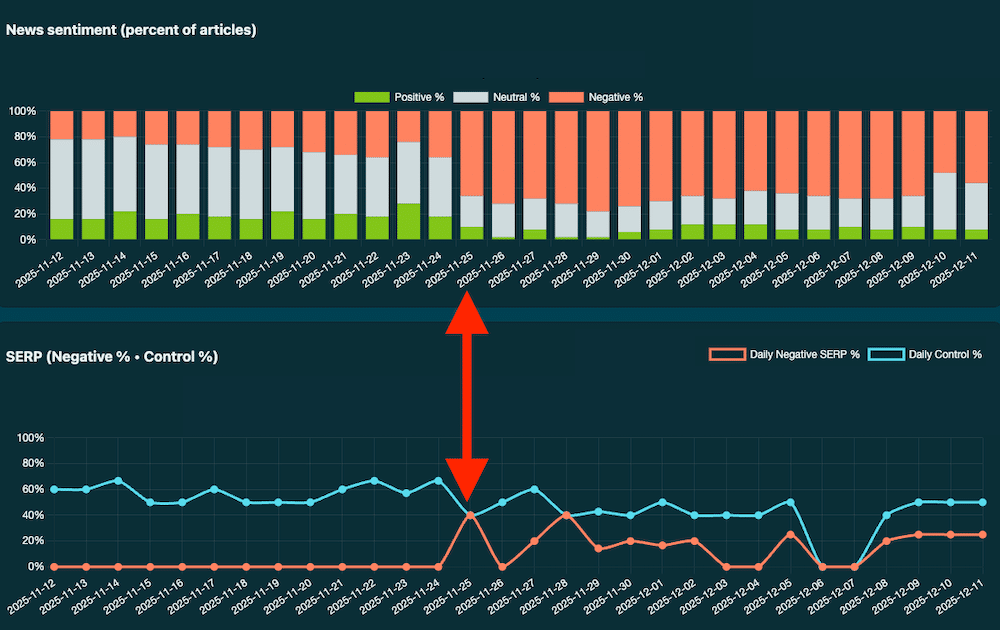
Campbell’s news sentiment became 70% negative
In the weeks since the story broke, the sentiment around Campbell’s in Google’s newsfeed jumped from an average of 28% unfavorable to 70% unfavorable — meaning 70% of the news articles surfacing for the search term “Campbells” could be classified as negative.
The brand’s entire page one search landscape has been overtaken by the narrative, including prominent Google Search features like Top Stories, What People Are Saying, and Videos.
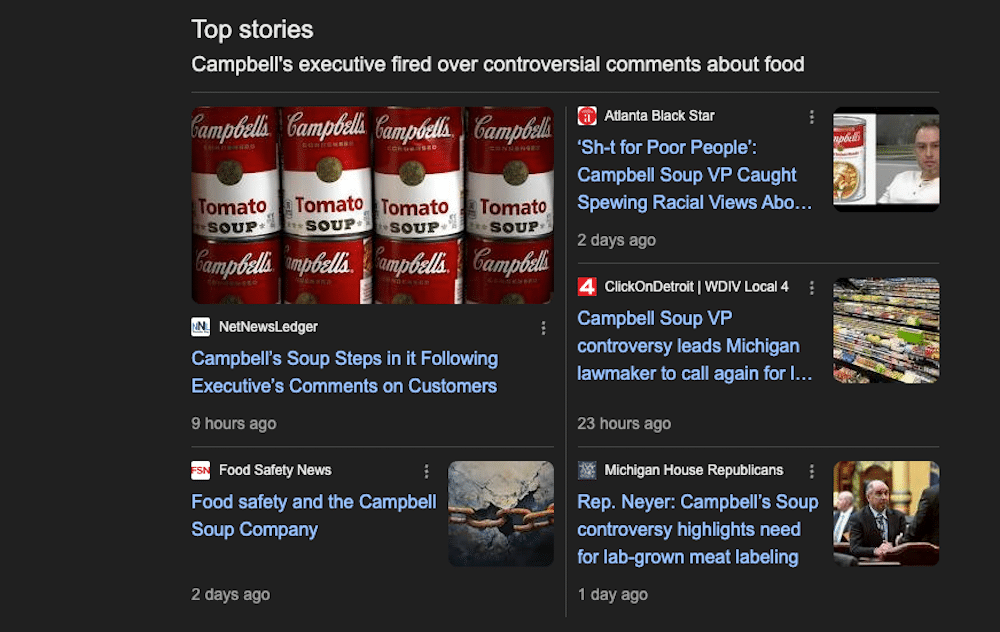
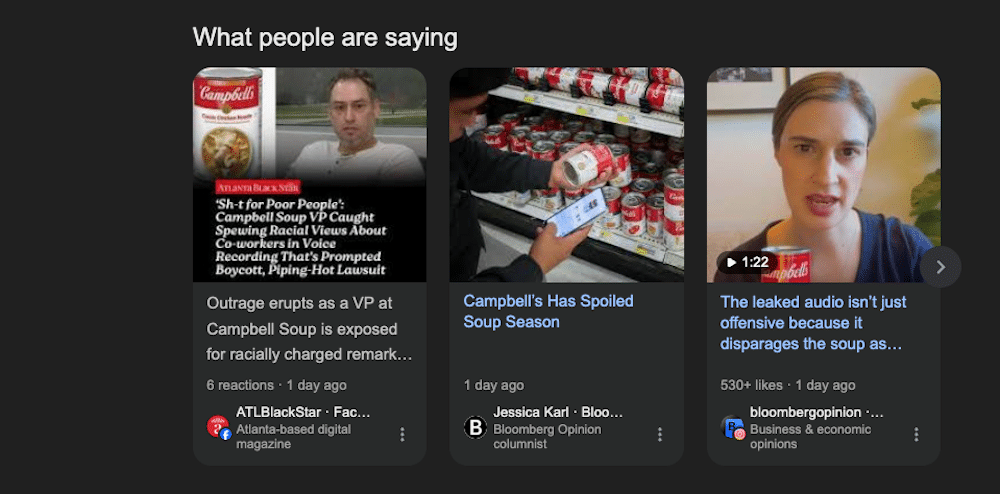
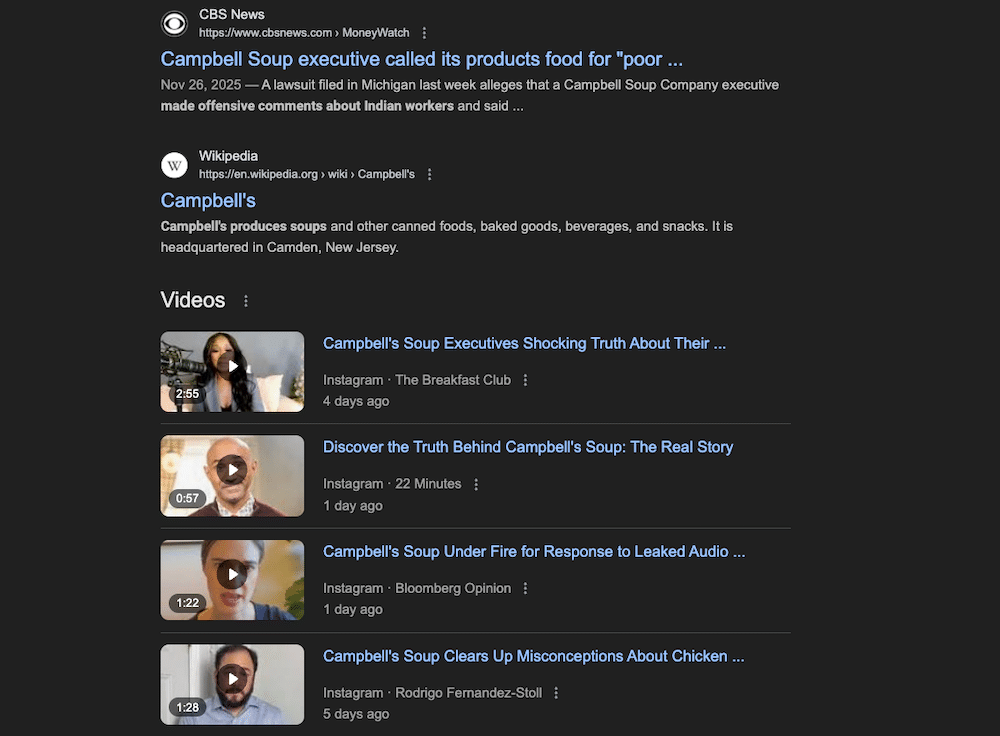
Within 24 hours, the flood of negative headlines even overtook Campbell’s page-one organic search results.
Usually organic listings like a corporate website and social media profiles are considered a brand’s crisis firewall because they’re controlled domains that keep unfavorable results off the first page of Google. They also give companies more real estate to control their narrative.
But Campbell’s didn’t have enough control over its search landscape to hold back the blistering media storm, so undesirable content took root.
Generative AI introduces more controversy
Headlines about 3D-printed meat sparked a surge in consumer search interest for topics like “Campbell’s meat,” “bioengineered meat,” and “3D printed meat,” according to Google Trends data. But as consumers sought clarity, generative AI surfaced even more unfavorable information.
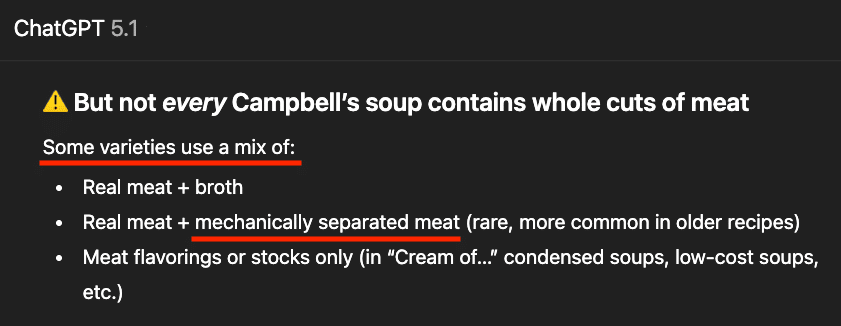
I asked ChatGPT, “What kind of meat does Campbell’s use in its soup?” The response listed “breast meat, thigh meat, and mechanically separated chicken (MSC).”
To make sure that wasn’t a hallucination, I asked, “Does Campbell’s Soup use real meat?” And ChatGPT doubled down on the claim that “Some varieties use a mix of real meat and mechanically separated meat.”
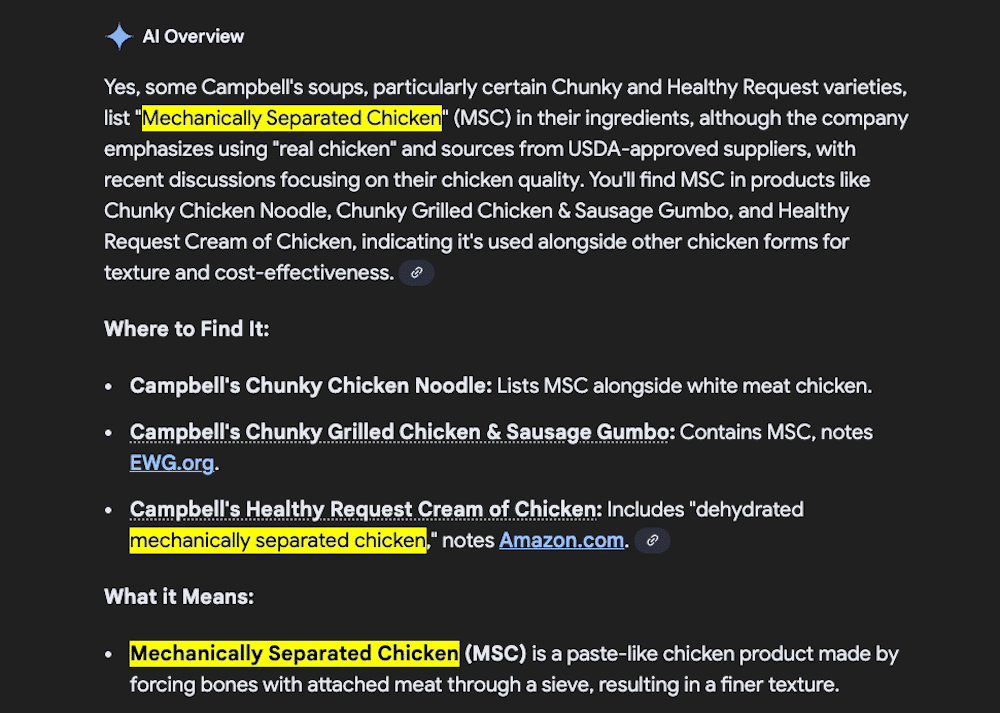
Google’s AI Overviews confirmed the ingredient and offered more information about it. Although MSC is FDA approved, and technically it’s “real chicken,” it’s not a favorable narrative for Campbell’s.
The Impact on Campbell’s Business
In the 11 days since the story broke, Campbell’s brand has been scrutinized by its most important stakeholder groups: consumers, investors, lawmakers, and the media.
- Analysts lowered price targets for CPB, contributing to a 7.3% decline in share price and erasing nearly $684.7 million in market capitalization.
- Regulators mentioned possible investigations and tightening food labeling requirements.
- Consumers reacted by calling for boycotts and claiming they would never buy Campbell’s products again.
- If the controversy drags on too long it could dent employee sentiment, increasing turnover and raising hiring costs.
What Campbell’s did right
In response to the crisis, Campbell’s published a page on its corporate website addressing the controversy and setting the facts straight.
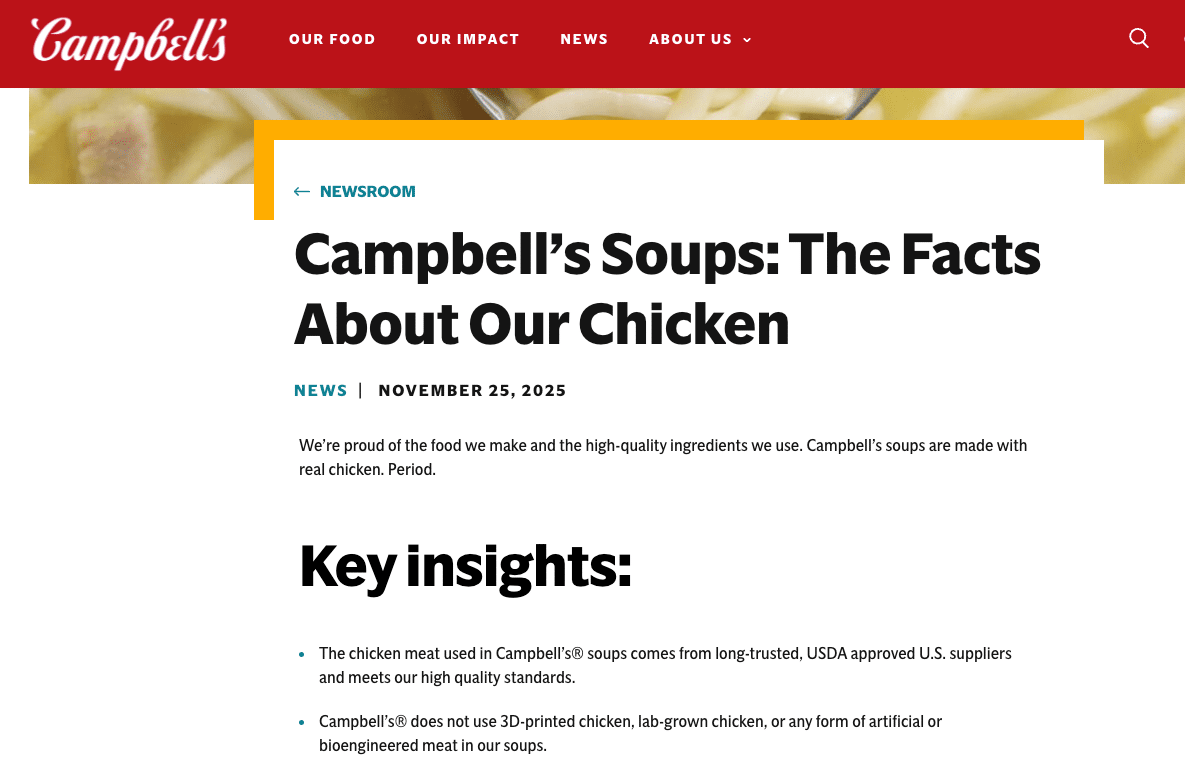
The page clearly states that the reporting was false and clarifies the correct ingredient sourcing for Campbell’s Soups. The page is clean, simple, and well-structured using an FAQ format which can help influence how Google and LLMs understand and present the story to consumers.
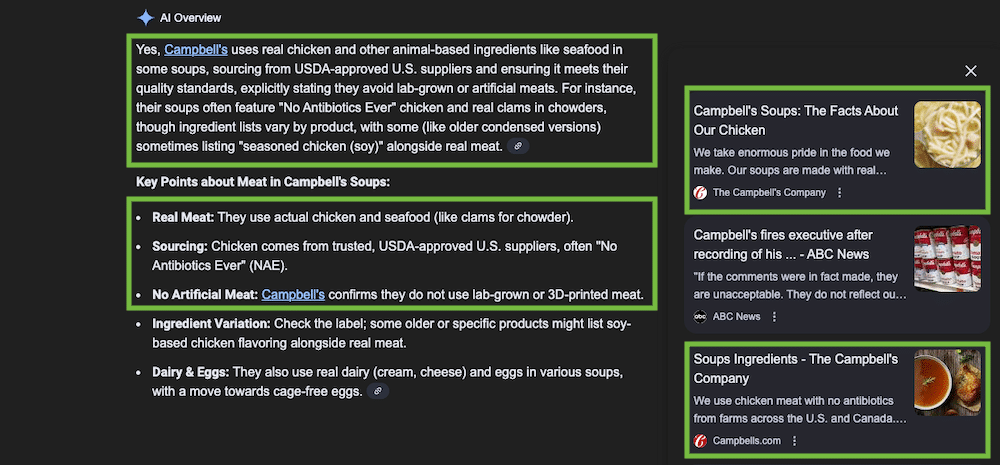
Campbell’s influences some generative AI responses
Google began citing Campbell’s new page in some of its AI-generated responses.
And when ChatGPT searched the web for more information, it also cited Campbell’s new page.
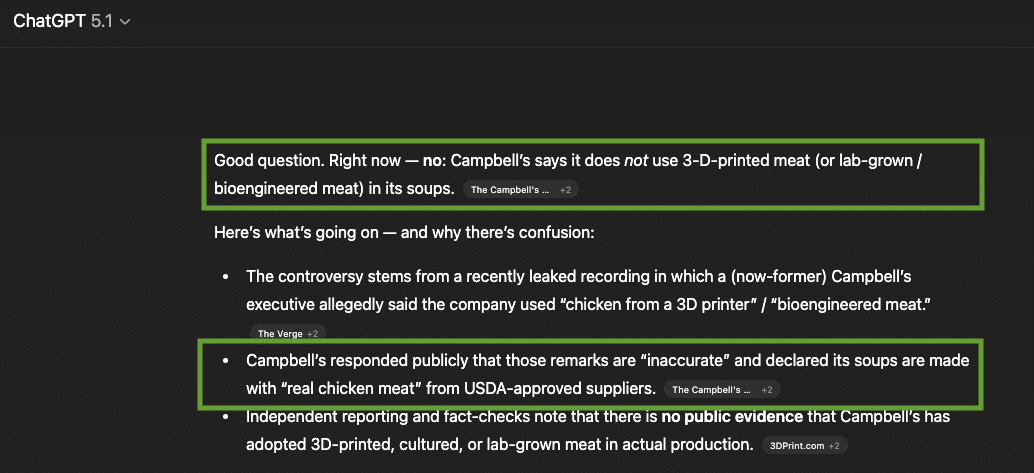
While this is a good start, it hasn’t improved the brand’s broader search landscape. Its page-one organic listings remain 25% negative, and multiple product queries are inundated with unfavorable articles, videos, and discussions.
The Campbell’s Company still has a long road ahead to restore its reputation by rewriting its narrative across Google and generative search platforms.
Takeaways
Generative AI and third-party publishers can hijack a brand’s narrative and amplify false information during a crisis. The two most critical things brands can do to protect themselves before, during, and after a crisis are:
- Fortify your search landscape. The more page-one organic search results you control for your brand, the less likely unfavorable content will appear there. This reduces your overall risk profile along with the visibility, shelf life, and impact of a crisis on stakeholder groups.
- Audit and monitor generative AI for risk. It’s critical you know exactly what generative AI is saying about your company and products before a crisis. This gives you time to shore up vulnerabilities and correct inaccuracies before your brand is subjected to intense public scrutiny.

The Brand Intelligence Report
Exclusive AI insights, search trends, and brand strategies, delivered to your inbox.